http://www.facebook.com/KarenEdwardsConservationPhotography/
Bonaparte Lake, one of the few lakes in Washington that annually support breeding Common Loons, lies just a little south of the Canadian border in Okanogan County. Bonaparte Creek feeds out of it to the south, passing through nearby Bonaparte Meadows (technically, a “calcareous fen”, one of the rarest types of wetlands in the nation).
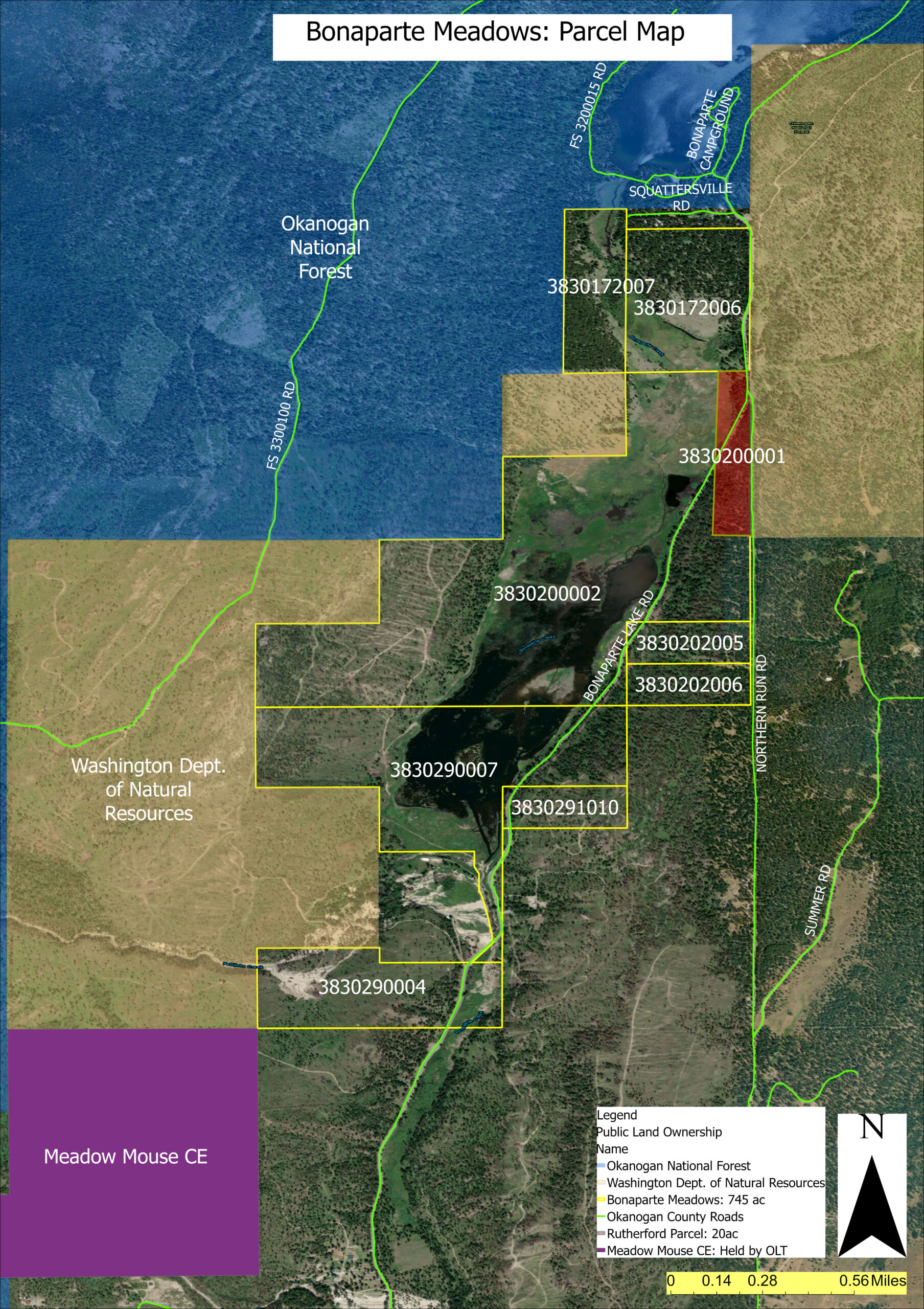
Okanogan/Wenatchee National Forest surrounds most of the Bonaparte Lake and Washington Department of Natural Resources lands are adjacent to portions of Bonaparte Meadows, so there’s already substantially connected public lands ownership in the area. The 745-acre meadows property (view map), however, is currently privately owned.
While the fen is the property’s signature feature, it hosts upland habitats as well and is an absolute biodiversity hotspot. A bird survey conducted there in May 2026 found 78 species, including nesting Bald Eagles, Golden Eagle, Blue-winged Teal, Barrow’s Goldeneye, Wilson’s Phalarope, and Williamson’s Sapsucker. Go to https://ebird.org/tripreport/526710 to read the full list. Future surveys will certainly add many more species to it.
The Bonaparte Meadows property is currently for sale. The good news is that Okanogan Land Trust (OLT) stepped up and has obtained an option to purchase it. If successful, acquisition of the property will secure the fen’s future as a critical biotic component of the uncommon mix of important habitats stretching from the lake to the meadows. Considering the property’s high diversity of birds, mammals, amphibians, and more, the chance of securing it for conservation is an opportunity we can’t afford to let slip away.


Fundraising for the potential acquisition is underway, with a deadline of July 31st. Of the $1,500,000 needed to complete the purchase, commitments of over $900,000 have been received, leaving approximately $600,000 yet to be secured. To lend a hand and help push this effort across the finish line, go to https://www.okanoganlandtrust.org/protect-bonaparte-meadows-3/.